
 Vika Laki
A one-week trip to Japan typically runs $1,200 to $3,000 for a mid-range traveler, covering flights, hotels, food, local transport, and a few activities. That’s the Japan travel cost per day working out to roughly $170–$430 depending on travel style. Planning a trip to Japan means budgeting for a country you’ve never visited, which is genuinely hard: prices in yen don’t map cleanly onto dollars in your head, and it’s easy to either overestimate and skip the trip or underestimate and run short halfway through.
How much would a trip to Japan cost really depends on trip length, season, and travel style more than anything else. This guide breaks the cost breakdown down by category, by how long you’re staying, and by who you’re traveling with, so you can build a number that matches your trip instead of guessing.
Average cost of a trip to Japan

For a mid-range solo traveler, a Japan travel budget for a mid-range trip in one week averages around $1,200 to $2,000 total, and this average trip to Japan cost breaks down as roughly $600–$1,200 for the round-trip flight, $140–$400 for a week of hotels, $100–$210 for food, $30–$50 for local transport, and $35–$100 for activities. Budget travelers can bring the total closer to $1,000, while luxury travel pushes it past $3,000.
| Expense Category | Estimated Cost Range |
|---|---|
| Flight (Round Trip) | $600 – $1,200 |
| Hotel (Per Night) | $20 – $500 |
| Public Transportation | $1.50 – $5 per trip |
| Food (Per Meal) | $5 – $30 |
| Total Cost for 1 Week | $1,200 – $3,000 |
| Total Cost for 2 Weeks | $3,000 – $6,000 |
Traveler experience: Nine days, one person, mid-range everything, and I came home having spent just under $2,000 including the flight. The breakdown: $915 for a one-stop return from Chicago, ¥71,400 on eight nights of hotels, ¥37,000 on food, ¥31,500 on trains, ¥12,800 on entry tickets, and $12 on an eSIM. The line I got wrong was the smallest one. I budgeted nothing for coffee, coin lockers, and konbini snacks, and those three came to about ¥14,000 by themselves. Coin lockers alone ran me ¥400 to ¥700 every time I wanted to walk around a city without dragging my suitcase behind me.
What determines the cost of a trip to Japan?
What a trip to Japan really costs comes down to a handful of factors that move the total more than anything else:
- Season: cherry blossom season and autumn foliage cost noticeably more than summer or winter.
- City and region: Tokyo and Kyoto run higher than smaller cities like Takayama or most of Kyushu.
- Travel style: budget, mid-range, and luxury can differ by three or four times on the same trip length.
- Trip length: longer stays lower the average daily cost through cheaper weekly hotel rates and JR Pass math.
- How you move around: bullet trains between cities cost far more than local subway and bus travel within one.
Read also: Cherry Blossom Season in Japan.
Flight costs to Japan
The cost of flights to Japan depends heavily on departure city, season, and how far ahead you book. A round-trip economy ticket from major North American cities to Tokyo generally runs $600 to $1,500 or more.
| From | Cost |
|---|---|
| USA | $600 – $1,500 |
| UK | $1,100 – $1,700 |
| Australia | $800 – $1,400 |
Traveler experience: I paid $915 return from Chicago to Haneda, booked eleven weeks out. A friend on the same route booked seventeen days before departure and paid $1,420 for a worse itinerary than mine. What the cheap fare cost me in other ways: a nine-hour layover in Seoul and a 10:40pm arrival at Haneda. By the time I’d cleared immigration and gotten into the city, I’d effectively paid for a hotel night I only used for six hours of sleep. If you’re pricing a fare that lands after 9pm, add that wasted night to the ticket price before you compare it against a pricier, better-timed flight.
Money-saving tips for flights
- Use Google Flights to track prices for a few weeks before booking.
- Book round-trip economy several months ahead where possible.
- Stay flexible on dates, a few days’ shift can change the fare significantly.
- Consider a one-stop itinerary if it lands at a reasonable hour.
- Compare Tokyo and Osaka as arrival cities if your itinerary allows either.
Accommodation costs in Japan

Accommodation ranges from capsule hotels and hostels around $20–$50 a night, to mid-range business hotels around $70–$150, to ryokan and premium hotels from $150 to $500 or more. Budget hotels and hostel chains sometimes offer private rooms alongside dorm beds, usually at a smaller premium than booking a full business hotel.
Chains like Toyoko Inn and Dormy Inn sit solidly in the business hotel bracket, consistent and predictable across cities. A ryokan stay often includes access to an onsen, a natural hot spring bath, which is part of what pushes the price above a standard hotel room.
Traveler experience: I slept in three price brackets on one trip, and the middle one surprised me most. A capsule in Osaka was ¥3,600 a night, clean, and honestly better than I expected. A business hotel in Shinjuku ran ¥11,200. A ryokan in Hakone with dinner and breakfast included came to ¥26,000 per person, and it was the only night of the whole trip I’d call genuinely expensive. Nobody warns you about the room sizes. The Shinjuku room was about eleven square meters. My suitcase lived open on the floor for four nights because there was nowhere else to put it. The capsule locker fit a carry-on and wouldn’t have taken a 28-inch case, so check the luggage rules before you book one with a big bag.

Accommodation costs by city
Tokyo generally runs the most expensive for lodging, followed by Kyoto, with Osaka’s hotel rates usually landing a bit cheaper than both for a comparable room. Actual costs near major train stations tend to run higher than the same room class a few stops further out.
Traveler experience: This is a note nobody else’s guide has caught up on yet. Kyoto’s lodging tax changed on 1 March 2026, and it’s charged per person, per night, on top of the room rate. The tiers key off what your room costs: under ¥6,000 a night you pay ¥200, from ¥6,000 to ¥19,999 you pay ¥400, from ¥20,000 to ¥49,999 it’s ¥1,000, from ¥50,000 it’s ¥4,000, and at ¥100,000 and above it’s ¥10,000 per person per night. I booked a ¥18,600 room and paid ¥400 each. Two of us, three nights, ¥2,400 in cash at checkout that no booking site had shown me anywhere in the price breakdown. Watch the ¥20,000 line, because a room at ¥20,100 costs an extra ¥600 per person, per night in tax for one yen more of room rate. If your hotel quotes just above a tier boundary, ask whether they can price it just below.
Food costs in Japan
Japan can be expensive by reputation, and food is usually the category where that reputation for being expensive falls apart fastest for foreign visitors. Convenience store meals run $3–$6, casual ramen or noodle shops $5–$10, mid-range restaurants $15–$30, and kaiseki or premium dining considerably more. Japan is rarely more expensive compared to other major travel destinations when it comes to eating well, and often cheaper.
Traveler experience: My food spend for the week came to ¥37,000, about $245, and I ate well every single day. A konbini breakfast was ¥480 for an onigiri, a coffee, and a banana, and a canned coffee from a FamilyMart or vending machine near a JR station typically runs about ¥150. A bowl of ramen was ¥1,050, with cheaper standing shops nearer ¥800. Standing soba near a station cost me ¥520. One splurge at a sushi counter in Kanazawa came to ¥6,800 and was the best meal of the whole trip. Expect to pay a bit more for the same bowl of ramen in a Tokyo train station than in a neighborhood shop a few stops away.
Transportation costs within Japan
City transport is the quiet line item that most first-time visitors underbudget. Getting around Japan means choosing between rail passes for intercity travel and pay-as-you-go city cards for local hops, and the two rarely overlap.
Traveler experience: individual Tokyo Metro hops ran ¥180 to ¥250, and I averaged about ¥1,150 a day across four days in Tokyo without ever really thinking about it. Get a Suica or Pasmo card at the airport and stop counting individual fares, it works as a tap-and-go Tokyo subway ticket across nearly every line and most buses. The part that caught me out is that a Japan Rail Pass covers JR lines like the Yamanote loop, but not the Tokyo Metro or the private lines, so on the days I mixed the two I ended up paying twice. Budget about ¥1,000 to ¥1,500 a day for local transport in Tokyo and Osaka, on top of whatever you spend on intercity trains. A rental car is rarely better value than trains for the standard Tokyo-Kyoto-Osaka route, though a car rental can make sense for reaching rural Kyushu or the Japanese Alps where train coverage thins out.
Is the Japan Rail Pass worth it?
Two things to check before you decide.
- The standard pass doesn’t cover the fastest Nozomi trains without a supplement, so pass holders take the slightly slower Hikari and add twenty to twenty-five minutes each way.
- From 1 October 2025, the 7-day ordinary pass costs ¥53,000 through overseas sales agents, while the official online service held the older ¥50,000 price for a limited window. Buy on the official site and check the current price the week you book.
Traveler experience: I did the JR Pass math myself and the pass lost, which isn’t what I expected going in. A 7-day ordinary pass is ¥50,000. A reserved Nozomi seat from Tokyo to Kyoto is about ¥14,170 one way. That means the pass needs roughly three and a half long legs just to pay for itself. My route was Tokyo to Kyoto, a local hop to Osaka, then Osaka back to Tokyo. Three legs, and only two of them long. Individual tickets came to about ¥29,500 and saved me ¥20,500 compared to buying the pass.
Attractions and activities costs
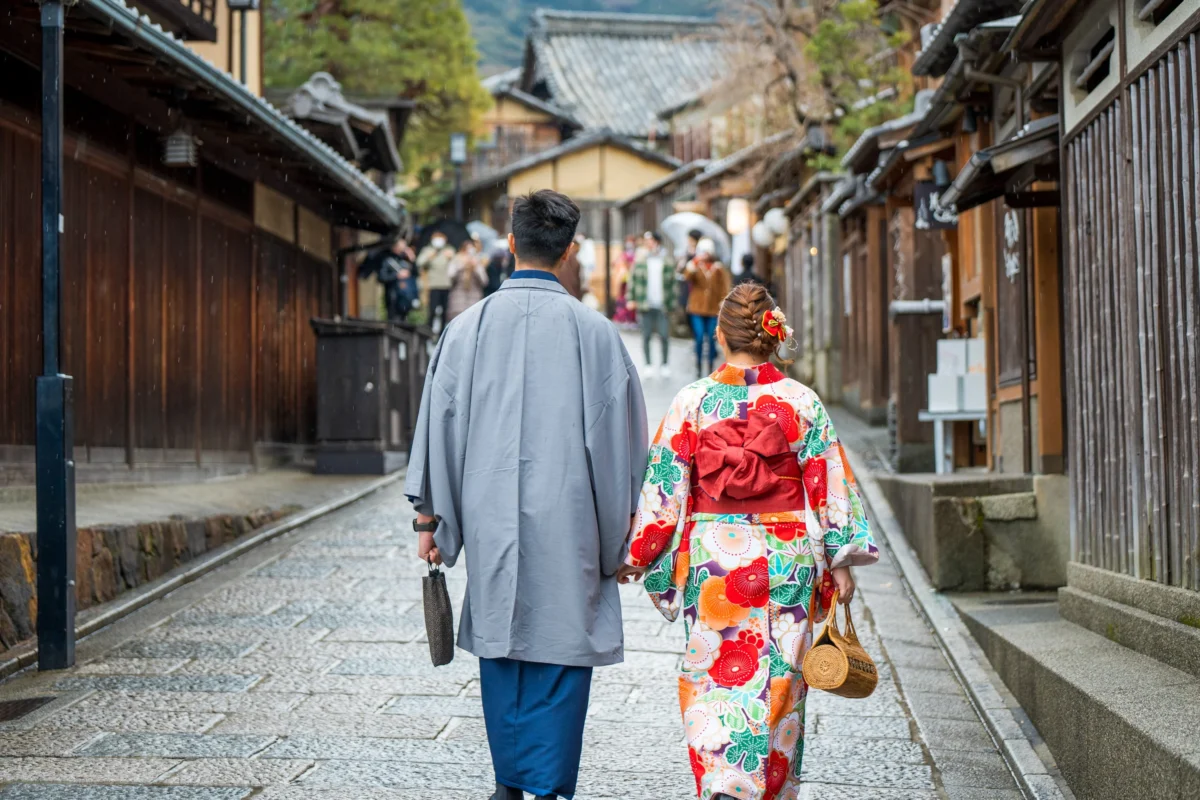
A few of the best things to do cost nothing at all:
- Fushimi Inari Shrine grounds.
- Meiji Jingu Shrine grounds.
- The observation deck at the Tokyo Metropolitan Government building.
- Many public parks and gardens, especially outside peak bloom.
- Odaiba’s waterfront area, aside from paid attractions like teamLab Planets.
Traveler experience: individual temple entries are cheap and they still add up. Most Kyoto temples charge ¥400 to ¥600. I visited nine of them and spent ¥4,600 total, without once feeling like I was really spending money. A day trip to Nara for the deer park and Todai-ji temple runs similarly low, mostly transport cost plus small entry fees. Osaka Castle’s grounds are free to walk, with a modest entry fee for the museum inside the main tower. Tokyo Disneyland uses date-based pricing, ¥7,900 to ¥10,900 for an adult one-day passport depending on the day you pick. I went on a Tuesday and paid ¥9,400. A weekend in high season sits at the top of that range, and there’s no park hopper, so visiting both parks means two separate tickets on two separate days.
Read also: Best Places to Visit in Japan.
Connectivity and eSIM costs in Japan
Staying connected is usually the cheapest line in a Japan budget, and one of the most stressed-about before departure. A physical SIM at the airport, a pocket WiFi rental, or an eSIM installed before you fly are the three realistic options.
Read also: Prepaid Internet in Japan: Where and How to Buy.
Traveler experience: the pocket WiFi counters at Haneda were quoting ¥1,500 to ¥1,800 a day for unlimited data, plus a deposit and a trip back to the counter before my flight home. I bought an eSIM before I flew instead, activated it right on the runway, and paid about $12 for the whole nine days. Nothing to collect, nothing to return, nothing extra in my bag next to the Suica card and the power bank. Yesim’s Japan eSIM covers exactly this use case. My partner’s phone was too old to take an eSIM, so we ended up buying one eSIM and one physical SIM at the airport, worth checking your device compatibility before you fly. And if you’re a group of four happy to stay together all day, one shared pocket WiFi router can work out cheaper per head than four separate eSIM plans. For one or two travelers with a recent phone, the eSIM isn’t close on convenience.
How much mobile data do you need for a trip to Japan?
I used 8.4GB over nine days, and almost all of it was Google Maps plus pointing my camera at menus to translate them. Around 1GB a day is a safe planning number if you navigate constantly and post photos. For a more precise estimate based on your own trip length and habits, see how long mobile data lasts.
Yesim tip: install the eSIM profile before you leave home, not at the airport. Activating it on the plane or right after landing means you skip the counter entirely and land already connected.
Passport, visa, and travel insurance costs
For US citizens, short tourist stays in Japan don’t currently require a visa, though it’s worth confirming current entry requirements before you book, since these rules do change. A US passport renewal runs around $130, and travel insurance for a Japan trip typically costs $30–$100 depending on trip length and coverage.
Traveler experience: two costs changed in 2026 and neither one is in most Japan budget guides yet. The departure tax went from ¥1,000 to ¥3,000 per person on 1 July 2026. You won’t queue for it, it’s collected inside your airline ticket, but a family of four is now paying ¥12,000 just to leave.
The bigger one is shopping. Until 31 October 2025, tax-free purchases came off at the register. From 1 November 2025, you pay the full price with the 10% consumption tax included and claim the refund at the airport before you fly. If your trip starts in November or later, budget your cash flow as if everything costs 10% more than it does, because you won’t see that money again until after you’ve gone home. Add 45 minutes at the airport for the refund process, and keep your receipts together in one envelope.
Read also: Japan Visa Requirements.
Daily budget by travel style: comparison table
A mid-range trip covers a comfortable middle ground, without the discomfort of the tightest budget option or the additional cost of the luxury tier. These figures assume flights included in the separate flight line above.
| Category | Budget | Mid-Range | Luxury |
|---|---|---|---|
| Accommodation | $20 – $50 | $70 – $150 | $200 – $500+ |
| Food | $15 – $25 | $35 – $60 | $80 – $150+ |
| Transportation | $5 – $10 | $10 – $20 | $20 – $40 |
| Activities | $5 – $15 | $15 – $40 | $40 – $100+ |
| Total per day | $45 – $100 | $130 – $270 | $340 – $690+ |
How much does a trip to Japan cost by length of stay?
How much does it cost to travel to Japan changes significantly with trip length, since longer stays spread fixed costs like flights across more days.
| Duration | Budget | Mid-Range | Luxury |
|---|---|---|---|
| 1 Week | $900 – $1,300 | $1,200 – $3,000 | $3,500 – $6,000+ |
| 2 Weeks | $1,700 – $2,500 | $3,000 – $6,000 | $6,500 – $12,000+ |
| 1 Month | $3,200 – $4,500 | $5,500 – $10,000 | $12,000 – $20,000+ |
Cost of a 1-week trip to Japan
How much does a trip to Japan cost for 1 week, or how much does it cost to go to Japan for a week: a one-week trip lands around $900–$1,300 for budget travel, $1,200–$3,000 mid-range, and $3,500–$6,000+ for luxury, including the flight. The cost of trip to Japan at this length is dominated by the flight and a handful of hotel nights.
Cost of a 2-week trip to Japan
How much does a trip to Japan cost for 2 weeks: a 14-day trip roughly doubles the daily costs but usually improves on per-night accommodation rates, since longer hotel stays sometimes unlock better rates. Expect $1,700–$2,500 budget, $3,000–$6,000 mid-range, and $6,500–$12,000+ luxury.
Cost of a longer stay (3–4 weeks)
Longer stays benefit from weekly and monthly accommodation discounts, and a JR Pass or regional pass becomes easier to justify across more travel days. The daily average tends to drop compared to a one-week trip, even though the total naturally climbs.
How much does a trip to Japan cost by traveler type?
Accommodation is where the family budget breaks. Most hotel rooms are built for two, so four people usually means booking two rooms, and the rooms that genuinely sleep four sell out months ahead in Tokyo and Kyoto. Book the accommodation first and fit the rest of the trip around it, not the other way round.
Solo trip to Japan cost
Solo travelers don’t split hotel costs with anyone, which pushes the per-person accommodation line higher than a couple’s trip. The tradeoff is more flexibility: capsule hotels, hostels, and last-minute changes are all easier alone.
Couple’s trip to Japan cost
Two people sharing a hotel room cut the per-person accommodation cost significantly compared to solo travel, and some transport passes and activity tickets offer minor savings for pairs. Food and individual transport costs stay roughly the same per person.
Family trip to Japan cost (family of 4)
Traveler experience: the Japanese rail discounts for children are generous, and the hotel rooms are not. Children under six travel free on JR if they sit on a lap, and ages six to eleven pay half the adult fare, so a family of four often pays for two and a half people on the trains. At Tokyo Disneyland, a child ticket, ages four to eleven, runs ¥4,700 to ¥5,600 against ¥7,900 to ¥10,900 for an adult.
Seasonal cost variations: when is Japan cheapest to visit?
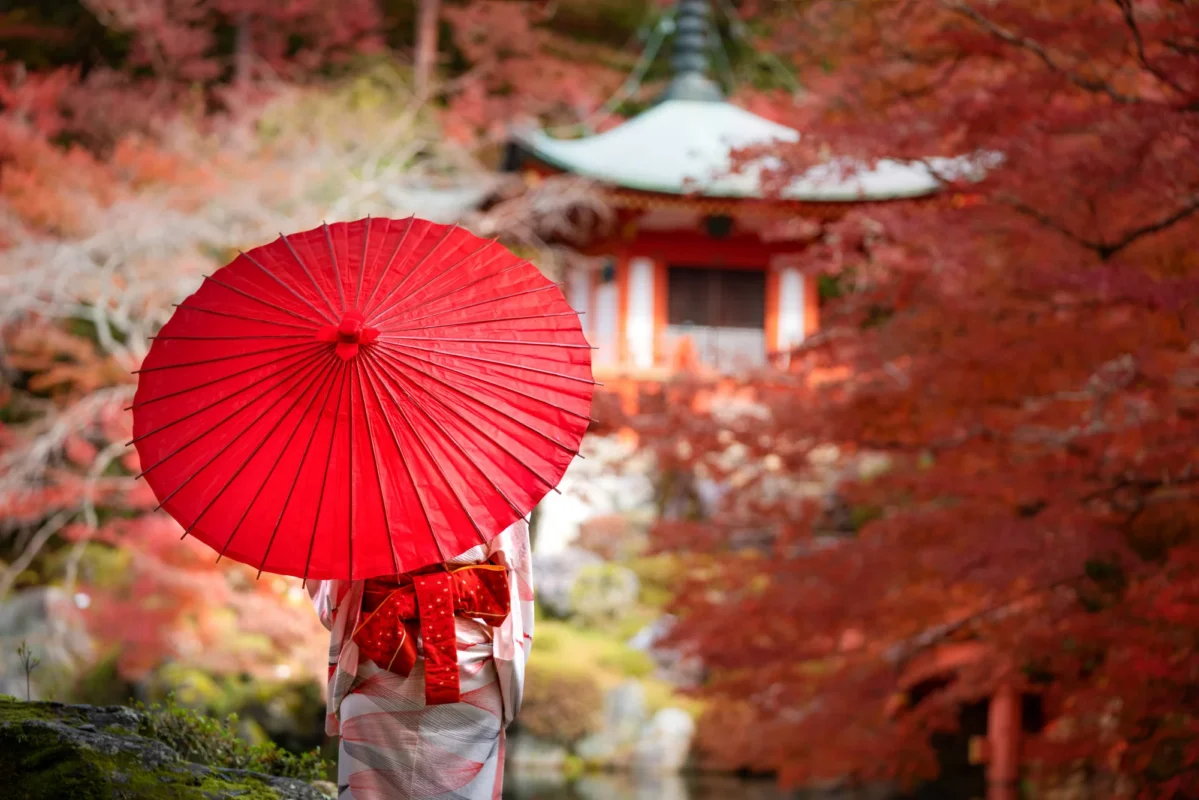
Peak pricing hits during cherry blossom season (late March to early April) and autumn foliage (November), plus Golden Week in late April to early May. Low season pricing, typically mid-summer and winter outside ski season and New Year, offers the cheapest hotels and airfares.
Traveler experience: the same room class in Kyoto cost me ¥7,400 a night in late June, versus ¥16,000 in early April for the same category. That saving bought me the rainy season. It hit 31°C at around 80% humidity, I lost two afternoons to rain, and I didn’t see a single cherry blossom. I’d do it again, but only because I care more about empty temples than about photographs. If the photographs are the point for you, pay for late March or November and book the hotel six months out.
Most expensive to visit:
- Cherry blossom season, late March to early April.
- Autumn foliage, November.
- Golden Week, late April to early May.
- New Year, late December to early January.
Best value to visit:.
- Mid-summer, hot and humid but noticeably cheaper.
- Winter outside ski resorts and New Year.
- Early to mid-June, just before the rainy season peaks.
Read also: Best eSIM for Japan.
How to save money on a trip to Japan
These are the best deals and ways to save that make the biggest difference without breaking the bank, depending on your travel style:
- Book flights months ahead and track prices with Google Flights.
- Mix accommodation types, capsule or business hotel most nights, one splurge night.
- Eat at konbini and standing noodle counters instead of restaurants for most meals.
- Get a Suica or Pasmo card immediately for city transport.
- Only buy a JR Pass after calculating whether your route pays it back.
- Visit free temples, shrines, and observation decks between paid attractions.
- Travel in early summer or winter for lower hotel rates.
- Install a travel eSIM before departure instead of renting pocket WiFi solo.
Traveler experience: Japan is less cash-only than it was five years ago, and still cash-only in the places that matter to a budget. Small ramen shops, some temple entries, coin lockers, and a few local buses wanted cash from me more than once. The 7-Eleven ATMs take foreign cards reliably and charge a fee per withdrawal, usually ¥110 to ¥220. I took out ¥50,000 twice instead of ¥20,000 five times, and saved myself a few hundred yen and a lot of walking around looking for a konbini with a working ATM.
Is Japan worth the cost?
Japan can be a budget destination or a premium one. The final number depends far more on travel style than on the country itself. A backpacker eating konbini food and sleeping in capsules spends a fraction of what a ryokan-and-bullet-train itinerary costs, and both are genuinely good trips.
Whatever the budget, connectivity is one line item worth locking in before departure rather than figuring out on arrival. Yesim’s eSIM for Japan activates before you fly, so the first thing waiting at Haneda or Kansai is a working phone, not a SIM counter line.